Why the Race Around Rwanda ultra race stays with you
For this ultra gravel racefeature, we caught up with Jair Hoogland after his recent ride at Race Around Rwanda. We asked Jair to take us through the experience itself. The landscape. The climbing. The long hours between checkpoints. What it feels like to race across Rwanda, far from familiar roads and routines.
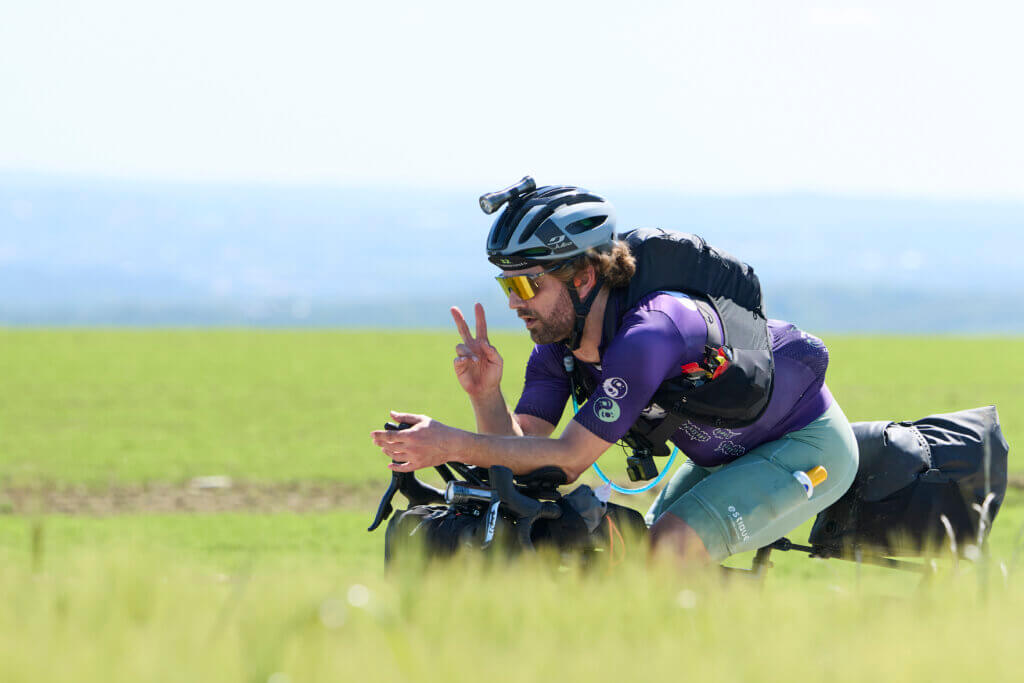
Bike & gear used – Sour Purple Haze , equipped with Son hub dynamo and Supernova lights, Cyclite bags, saddle bag, framebag and backpack and a Hutchinson Touareg TLR Hardskin 45mm tyres.
Finish status – 9th finisher
Official distance & elevation – 1000km (998km) with 19.000 hm
Why Rwanda?
Why did you choose the Race around Rwanda?
Race Around Rwanda had been on my mind for years. When I was preparing for my first ultra, Race Around The Netherlands, I started researching other events. That’s when I came across Rwanda’s first edition. The photos immediately triggered something. I could see myself riding there.
At the time I only had road bikes. Every year I kept following the race from a distance. Eventually I decided I wanted to be at that start line myself. I first aimed for 2025, but my bike didn’t arrive in time. So it became the year after. Finally, I could line up.
What did you expect before arriving?
Before arriving, I expected rough gravel, strong local presence along the roads, and excellent tarmac. I also expected a culture shock. I wanted to be pushed out of my comfort zone.
Had you raced outside Europe before?
I had never raced outside Europe. I had ridden in the USA and Canada, but never in a competitive setting. And I had never been to Africa before, let alone ridden a bike there.
The Terrain
How would you describe the landscape in Rwanda?
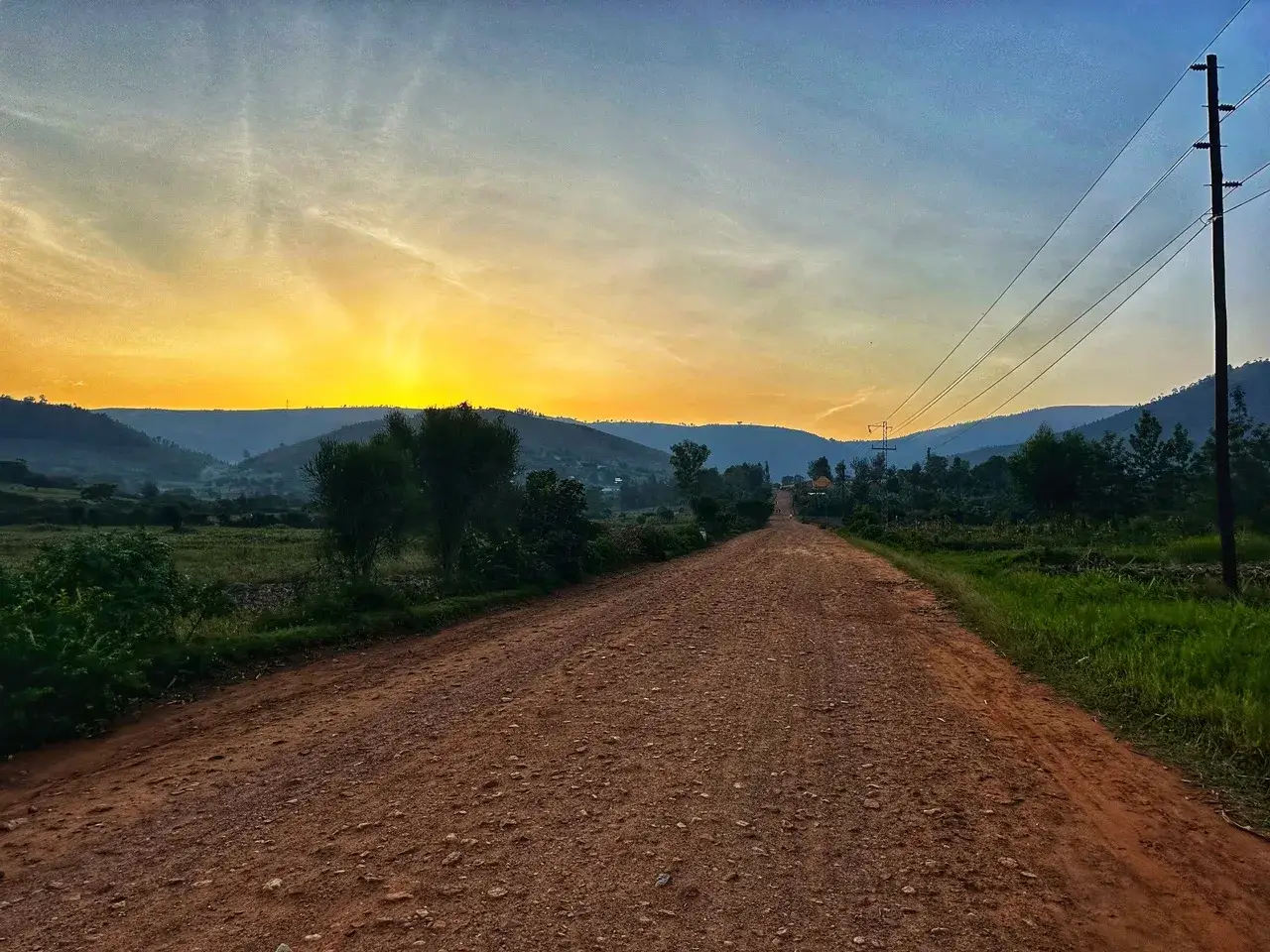
Rwanda is green. Even the cities feel green. There’s a reason it’s called the land of a thousand hills. Mountains might be more accurate. Elevation ranges between 1,500 and 2,700 metres. You are constantly climbing or descending.
Vegetation is everywhere. Banana fields, potatoes, tea plantations, forests. With that much green, you expect rain. I was lucky. Only short showers, although heavy rainfall is common.
What surprised you about the terrain, the roads and gravel surfaces?
The tarmac is excellent. Smooth and well maintained. The gravel varies by region. The first sections are relatively smooth. Higher in the mountains it becomes steeper and rockier. In volcanic areas there are sharp rocks that require careful line choice to avoid punctures.
Frequent rainfall washes parts of the road away. Add children running alongside or in front of you, and it becomes harder to focus on the ideal line. Race around Rwanda was my first gravel race. I only received my gravel bike in October and most of my experience was on relatively tame Dutch gravel. I expected to walk more than I did. In the end, walking was limited to short stretches.
The Climbing and Pacing
Can you tell us about your race strategy and pacing with all this rough gravel and climbing?
The race affected me even before it started. I arrived almost a week early to adapt to the altitude and climate. Instead, I adapted to the food. Despite being careful, I got food poisoning a few days before the start. I began the race without much power.
My initial plan was to start aggressively. Reach CP2 in the night and sleep there. That plan disappeared immediately. I didn’t have the strength to execute it. So I reverted to what I’m good at. Steady pace. Efficiency. Keep moving.
I slept twice at the end of day one and again at the end of day two. That helped manage fatigue. Still, the accumulation of climbing takes its toll. The further you go, the less power you have.
Is there a specific climb or section that stands out when you look back?
The highest point of the race, at 2,700 metres, stands out. A steep tarmac climb at altitude, surrounded by endless green. The descent was technical and hard on the hands from constant braking. I stopped several times for safety and to stretch my fingers. Those stops placed me in the middle of tea plantations, one of the most beautiful parts of the route.
The Mental Side
Was there a moment when the race started to feel started or stopped feeling like a competition?
I came to Rwanda to compete. Falling ill changed that. For much of the race I didn’t feel competitive. I simply didn’t have the power to push from the start. That was frustrating. Looking back, I feel I missed part of the racing experience.
At CP4, during dinner, I learned I was still in contention for a top ten finish. After finally eating properly, I felt stronger than at the start. When another rider behaved poorly toward hotel staff, I decided I wanted to beat him. The final 200 kilometres felt like a race again.
Did you consider quitting?
Did I consider quitting? No. I feared I might have to stop if things worsened, but I never considered voluntarily quitting. As long as I could keep moving, I would continue.
What kept you going?
What kept me going was curiosity. The landscape keeps changing. There is always something new to see. And I simply love riding and the sense of adventure.
Rwanda as a Place
How did the locals react to the race and to you?
Rwanda is densely populated. There are people everywhere. When you ride through towns, you are the attraction. Children run alongside you. Many shout, “Money, give me money.” Others want high fives. Some throw stones. When you are fatigued, these moments can be draining. When you feel good, they are easier to handle.
Life happens outside. People work in the fields. Kids walk to school. Bike messengers transport goods. Bars and shops open directly onto the street. There is constant activity.
Did you interact much with people along the route?
Interactions were frequent but brief due to language barriers. One exception was a young bike messenger who tried to stay in my wheel. On steep climbs he was out-geared and had to walk. Instead of giving up, he ran uphill to stay close. We shared a short conversation about his work.
Did racing in Rwanda feel different from racing in Europe?
Racing in Rwanda feels different from Europe. Shops have limited stock. Hotels are basic. Resupply requires flexibility. The country is not difficult to travel through, but expectations need to adjust.
Personally I also had a strong awareness of privilege. Riding an expensive bike through a country where many live with very little creates a double feeling. I underestimated how strongly that would affect me.
Mistakes and Lessons
Did you overestimate or underestimate anything upfront or during the race?
I underestimated the race. I knew it would be hard, but the combination of terrain, elevation, and altitude made it harder than expected. That said, I prefer a race that challenges me.
What would you do differently next time?
If I could change something, it would be my food choices before the start. I would be more cautious in places where water quality is uncertain. Starting healthy would have changed my approach.
Any hits or misses with your gear for your first ultra gravel race?
Gear-wise, I was totally happy with my bike. Perhaps 40 mm tyres would have rolled faster on tarmac, but with the potential for rain and rough gravel, 45 mm felt like the safe choice. Even though 45 mm felt slow on the tarmac.
Besides your stomach problems before the race, did you have any nutrition or hydration issues?
I took food for the full race. On day two I couldn’t see any of it but I forced myself to keep eating. That worked well although by the end I was buying biscuits as well just to have some kind of change. I would recommend everyone to bring a lot cause you won’t find any snickers in a local shop.
Practical Insight for Future Riders
What kind of rider would enjoy the Race around Rwanda?
This race suits riders who enjoy gravel and adventure. Whether you finish in 2.5 or 5 days, the challenge remains significant and you will be rewarded no matter wat your approach is.
Who might struggle here?
Go well prepared. It’s a challenge and not a walk in the park. Make sure you can do at least 200-250 km a day with challenging terrain with loads of elevation. If you think you can do that and you can embrace the unknown you will love it. But be aware conditions can be rough. Not just the surface and terrain you’re riding on. Also re-supply and the way hotels are equipped are not like we’re used in the Western world. If you can’t deal with that stay away, if you’re into adventure you’ll love it.
Is this race suitable as a first ultra?
As a first ultra, it is probably not ideal. It is technical and physically demanding. However, I met riders doing their first ultra here who finished successfully. With the right mindset and by taking it section by section, it is definitely possible.
Do you recommend the Race around Rwanda?
I would recommend the race. Rwanda is beautiful. It often feels like riding through paradise. Would I return? I would love to. At the same time, I am motivated by exploring new places. That is what drives my cycling.
Final Reflection
What stayed with me most is the beauty of the country. The endless green. The tea plantations. And the constant presence of people. This race reinforced my love for ultra racing. It also highlighted how different the world can be. The awareness of privilege, of riding through a developing country with expensive equipment, stayed with me more than any climb.
Race Around Rwanda is more than numbers. It is landscape, people, and perspective.
Contributor
Jair Hoogland
I'm Jair Hoogland, started riding road bikes in 2014 and got hooked. From a student with zero stamina I started to ride more and more rapidly, just because I wanted to explore. After I got to know the surroundings in Utrecht I joined a cycling club and made a trip to Paris and back. From there on I learned about bikepacking and heard about races like Transcontinental Race. Seemed far out at that point but after a bikepacking holiday with my girlfriend to Porto I knew this could be possible. First step was applying for Race Around The Netherlands and on this first self supported bikepacking race I became 3rd. This was the start of many races shortly after I joined Race Through Poland, than Transcontinental Race followed after. Ever since I've been doing two or three races a year. This year, 2026 I did my first off-road one with Race Around Rwanda. I'm not a guy winning these races but I'll always start to compete and see where I'll end, maybe one day...
2 comments on “Why the Race Around Rwanda ultra race stays with you”
Annemarie Mastenbroek
Very cool to read. Love the description of Rwanda’s stunning landscapes and the personal experiences; ranging from technical (gravel) insights to perception of self in a new cultural context. Thanks for sharing 🙂
Thanks for your reaction Annemarie! This is exactly why we want to share all these beautiful ultra stories. Every adventure is different and so is what we take from it as readers and followers back home.





Annemarie Mastenbroek
Very cool to read. Love the description of Rwanda’s stunning landscapes and the personal experiences; ranging from technical (gravel) insights to perception of self in a new cultural context. Thanks for sharing 🙂
Vincent Neve
Thanks for your reaction Annemarie! This is exactly why we want to share all these beautiful ultra stories. Every adventure is different and so is what we take from it as readers and followers back home.